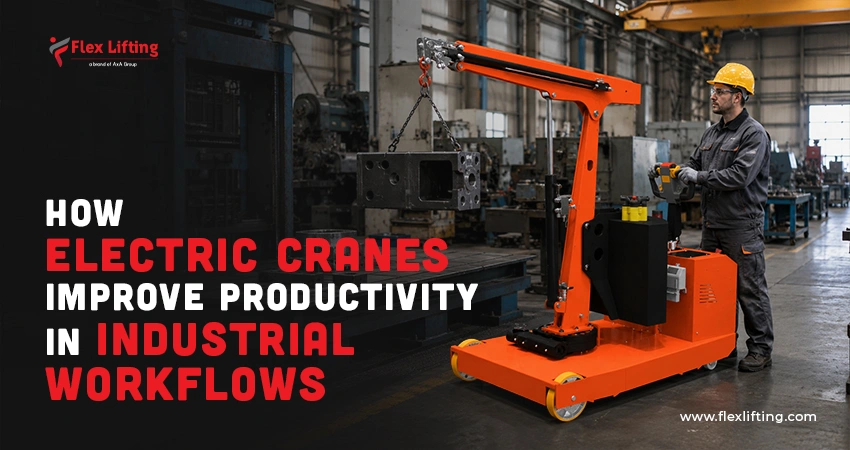
Electric cranes are modern lifting machines. They use electrical power to move heavy loads within industrial spaces like factories or warehouses. These systems replace the older manual or fuel based lifting methods because these new electric cranes are cleaner and have more accurate technology. They are designed to improve the way heavy items are handled during the daily manufacturing process.
Electric Cranes:Overview
- Electric Swivel Hooks :The main component of an electric crane is the electric Swivel Hook which lifts materials and can be equipped with an unlimited series of below the hook solutions such as lifting beams, magnets, vacuum lifters, etc. This component ensures that the weight is distributed evenly and equally so the crane will stay stable during every single movement.
- Accurate Control Interfaces: Operators use digital or remote controls to guide the crane with high accuracy across the floor of the facility. These interfaces allow for small adjustments that help position heavy parts exactly where they need to go for assembly.
- Structural Support Frameworks : Every electric crane relies on a sturdy bridge or runway system that supports the weight of the machinery and its cargo. This frame allows the crane to travel over large areas without taking up much space on the factory floor itself.
Key uses & Advantages of Electric Cranes
1. Improved Accuracy with Load
Electric motors give a level of control that hydraulic systems simply cannot match for small tasks. Operators can move heavy components by millimeters to ensure a perfect measurement during the difficult assembly of large machinery. This accuracy reduces the risk of damaging expensive parts and speeds up the overall pace of the production line highly.
2. Reduced noise
Factories have loud environments sometimes but doing the industrial things with the electric power helps lower the total decibel levels in the building. Electric cranes run much more quietly than diesel powered versions which creates a much better working environment for all staff members. Lower noise levels improve communication between workers and help to reduce long term ear fatigue for everyone on the shop floor.
3. Lower Energy cost
Electric cranes are more energy efficient than their fuel burning counterparts which leads to a huge reduction in monthly utility bills. They only use power when they are actively moving a load rather than idling like a standard combustion engine does. This efficiency allows companies to allocate their financial resources toward other important areas like research or hiring new skilled employees.
4. Small Carbon Footprint
Using electricity instead of fossil fuels means these cranes produce zero direct emissions inside the industrial workspace or the local atmosphere. This shift helps companies meet strict environmental regulations while giving a much cleaner and safer air quality for their workers. Reducing carbon output is also a great way to improve the public image of a modern and responsible manufacturing brand.
5. Faster Cycle Times
Electric cranes can accelerate and decelerate much faster than manual or older mechanical systems which helps to move items quickly. This speed allows workers to complete more lifting cycles in a single shift without risking any safety or accuracy during the process. Because of this the parts move faster from the warehouse and this makes the warehouse more responding.
6. Less Maintenance Needs
Electric motors have fewer moving parts than internal combustion engines so they do not need frequent oil changes or difficult fuel systems. This simplicity means that the maintenance team spends much less time fixing the cranes and more time on other facility tasks. Fewer breakdowns ensure that the production schedule remains on track without any unexpected and expensive delays during the working day.
7. Improved Safety Features
Modern electric cranes come with advanced sensors that can detect overloads or potential collisions before an actual accident occurs on site. These smart systems can automatically slow down or stop the crane if it detects an unsafe condition during a heavy lift. Keeping workers safe is the most important goal for any industrial manager and because of these kinds of good features, workers will have peace of mind.
8. Flexible Space
Overhead electric cranes move along the ceiling which clears up a lot of space on the ground for other activities. Forklifts and workers can move freely underneath the crane paths without worrying about bumping into bulky stationary lifting equipment or supports. Maximizing the available square footage allows a factory to install more machines or storage racks to increase their total output.
9. Consistent Performance
Electric motors give steady power and torque regardless of how long the machine has been running during a busy work shift. Unlike fuel systems that lose power as the tank gets low, electricity provides a very reliable and predictable lifting force. This consistency helps managers plan their workflows with high confidence because they know exactly what the equipment can do.
10. Integration with Automation
Electric cranes are designed to work perfectly with modern digital software and automated warehouse management systems that track inventory in real time. This connectivity allows for smart scheduling where the crane can be programmed to move items to the next station automatically. Integrating lifting tasks into a digital workflow removes human made mistakes and keeps the factory working well.
Conclusion
Electric cranes are very efficient machines as they increase the output and overall safety standards.
Electric cranes lower operating costs as they help businesses stay competitive in our demanding global market. Investing in electric lifting technology in companies like Flexlifting can be of great help for the bright future for the next generation workforce