


blog
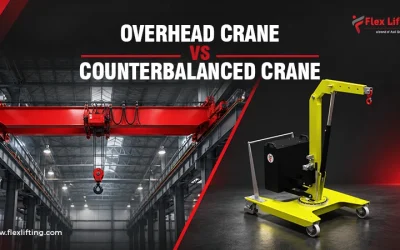
Overhead Crane vs. Counterbalanced Crane
Choosing the right lifting solution is not simply a question of lifting capacity. In industrial environments, factors such as available space, accessibility, outreach, installation requirements, production layout and the need to position loads precisely can be just as...
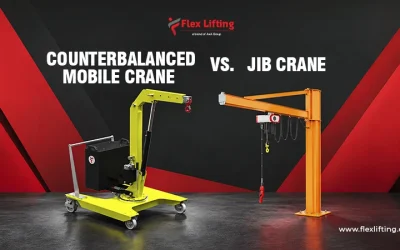
Counterbalanced Mobile Crane vs. Jib Crane
Choosing between a counterbalanced mobile crane and a jib crane depends on how and where the load needs to be lifted. Both solutions are widely used in industrial environments for lifting, handling and positioning components safely. However, they are designed around...
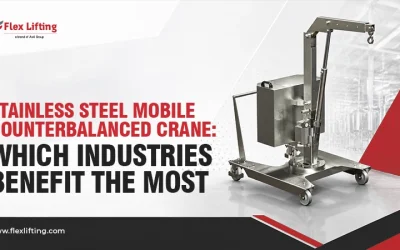
Stainless Steel Mobile Counterbalanced Crane: Which Industries Benefit the Most?
Lifting and material handling requirements vary significantly from one industry to another. Some working environments are characterized by high humidity, others involve contact with aggressive chemicals, while others must comply with strict hygiene, cleaning and...
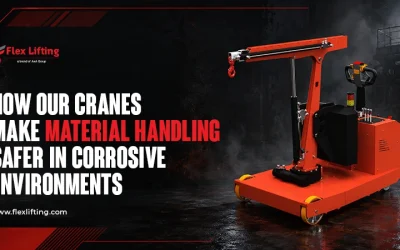
How Our Cranes Make Material Handling Safer in Corrosive Environments
Industrial environments can expose equipment to particularly aggressive conditions on a daily basis. Salt water, chemical vapors, humidity, detergents, and frequent washdowns can gradually compromise the performance and integrity of conventional steel. For this...
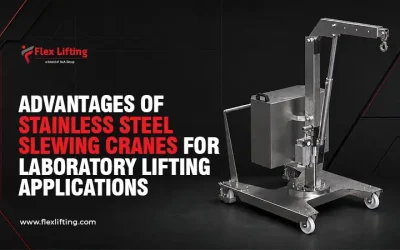
Advantages of Stainless Steel Slewing Cranes for Laboratory Lifting Applications
Contrary to what one might think, laboratories also have numerous lifting and material handling requirements. Incubators, centrifuges, chemical containers and other equipment can be considerably heavy and difficult, if not risky, to move manually. For this reason, a...
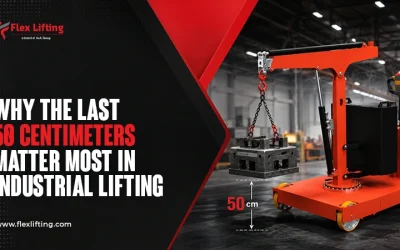
Why the Last 50 Centimeters Matter Most in Industrial Lifting
People think that industrial lifting and cranes are only about the weight they can manage. As if the weight capacity is the most important thing—500 kg, one tonne, two tonnes. How far can it reach? How compact is it? Experts in this field know what actually matters in...
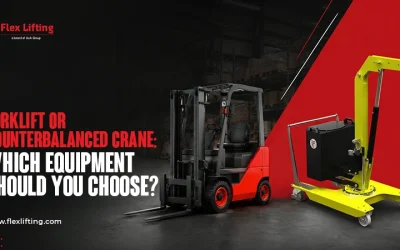
Forklift or Counterbalanced Crane: Choosing the Right Equipment
Forklifts and counterbalanced cranes are often compared because both can lift and handle loads. In reality, however, they perform different operations. A forklift is primarily designed to pick up, transport and stack materials, which are often placed on pallets. A...
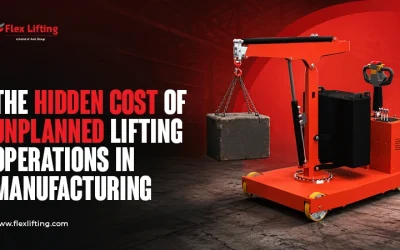
The Hidden Cost of Unplanned Lifting Operations in Manufacturing
Even in highly organised manufacturing environments, not every lifting requirement can be predicted. Urgent maintenance interventions, unexpected component replacements, machine breakdowns, tooling changes and the repositioning of production equipment can create...
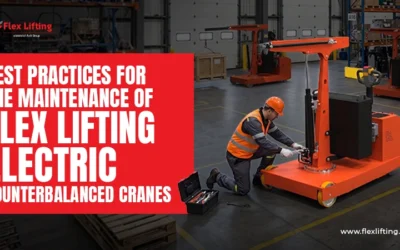
Best Practices for the Maintenance of Flex Lifting Electric Counterbalanced Cranes
Electric counterbalanced cranes are machines designed to simplify lifting and handling operations inside workshops, warehouses, production departments and industrial environments. However, like any lifting equipment, Flex Lifting cranes also require regular...
The Importance of Mobile Lifting Cranes in Material Handling Processes
Industrial lifting has changed significantly over the years. Traditional overhead cranes and fixed lifting systems still play an important role in many production environments, but modern factories, workshops and logistics areas often require something more flexible:...